|
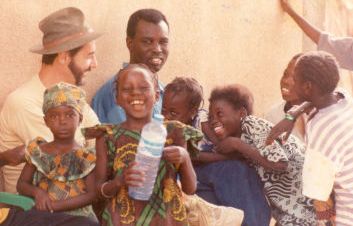 Senegal
is situated on the West African coast. It lies between Mauritania
to the north, Mali to the east, and Guinea and Guinea-Bissau to
the south. From the west the country of Gambia extends into and
is almost completely surrounded by Senegal. Senegal has two seasons:
rainy from June to October, and dry from November to May. Senegal
is situated on the West African coast. It lies between Mauritania
to the north, Mali to the east, and Guinea and Guinea-Bissau to
the south. From the west the country of Gambia extends into and
is almost completely surrounded by Senegal. Senegal has two seasons:
rainy from June to October, and dry from November to May.
The population is 8.8 million people, with a growth rate of 2.7%.
Young people are the majority of the population. More than 60%
of the population lives in rural settings. Agriculture (farming,
animal husbandry, fishing, forestry) employs up to 60% of the active
population. The capital city is Dakar. The six major traditional
languages are: Wolof, Pulaar, Serere, Diola, Soninke and Mandingue.
The official language is French. The per capita income is $570/year.
The life expectancy is 51 years.
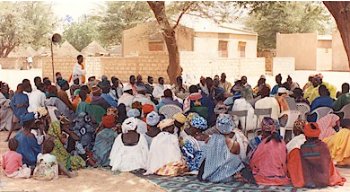 Senegal’s
development potential is rendered problematic by its harsh, arid
climate, its vulnerability to changes in rainfall amounts and the
pressure placed by rapidly increasing population levels on the fragile
and increasingly scarce resource base. This demographic pressure,
coupled with the effects of a continually shrinking forest and vegetal
cover and the inappropriate use of fertilizers has contributed to
the degradation of already-fragile soils, with consequent decline
in agricultural yields. Natural forests have shrunk over 7.4% over
the past fifteen years. Degradation of water resources, especially
from saline intrusion and pollution of subterranean waters by pesticides
and others pollutants, has increased steadily. The difficulties
of maintaining a productive existence in rural areas has contributed
to the rapid swelling of urban centers where environmental problems
are characterized by the near total absence of systems to manage
urban solid and liquid waste and to ensure adequate sanitation. Senegal’s
development potential is rendered problematic by its harsh, arid
climate, its vulnerability to changes in rainfall amounts and the
pressure placed by rapidly increasing population levels on the fragile
and increasingly scarce resource base. This demographic pressure,
coupled with the effects of a continually shrinking forest and vegetal
cover and the inappropriate use of fertilizers has contributed to
the degradation of already-fragile soils, with consequent decline
in agricultural yields. Natural forests have shrunk over 7.4% over
the past fifteen years. Degradation of water resources, especially
from saline intrusion and pollution of subterranean waters by pesticides
and others pollutants, has increased steadily. The difficulties
of maintaining a productive existence in rural areas has contributed
to the rapid swelling of urban centers where environmental problems
are characterized by the near total absence of systems to manage
urban solid and liquid waste and to ensure adequate sanitation.
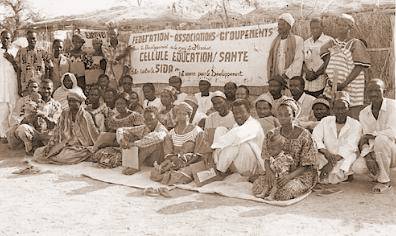 It
is essential for Senegal’s future that the environmental, food,
health, and educational deficits in rural areas be addressed to
discourage further out-migration and to maintain the strength and
well-being of families, communities and local culture. It
is essential for Senegal’s future that the environmental, food,
health, and educational deficits in rural areas be addressed to
discourage further out-migration and to maintain the strength and
well-being of families, communities and local culture.
|