 |
|
|
|
|
|
|
 |
 |
|||||
 |
 |
 |
 |
 |
 |
|
|
Thuamul Rampur Block is one of the most backward blocks in the Orissa State — As per sources from the “Planning and Coordination Department, Government of Orissa (GoO), it ranks third from the bottom in all development indicators. It comes under tribal sub-plan which focused on starvation deaths, child selling, etc. Sri R.B. Pattanaik, who was then the Collector of Kalahandi, advised the group to explore possibilities for initiating community development work in either Lanjigarth or Thuamul Rampur Blocks. As Lanjigarth Block already had the presence of some Non-Governmental Organizations (NGOs), the group opted to explore possibilities in the Thuamul Rampur Block where no NGOs existed at that time. The initial strategy was to gain experience by living with the Tribals and to address such issues which have the greatest impact on their very living conditions. Kalahandi is a district with several deficiencies in services and infrastructures. Especially in the Thuamul Rampur Block where people are deprived of basic services such as health care and education facilities. Thuamul Rampur is in an area of difficult terrain and therefore prevents the community from access to the few facilities that are available. The people of Thuamul Rampur are more exposed to malarial attacks, malnutrition, and hazardous conditions. The skewed land distribution compels the rural poor to face food scarcity for approximately four to five months per year which in turn manifolds the difficulties. Keeping all of this in view, ANTODAYA has been working in the area since its inception and is attempting to build a society where there is “NO HUNGER, DISCRIMINATION, INJUSTICE (ARISING OUT OF INERTIA), AND DISEASES. ANTODAYA believes that it is possible and can be realized through group action and participation, which leads to:
ANTODAYA has extensive experience in working with the rural poor of Thuamul Rampur and perceives that an ISOLATED approach will fall short in answering the needs of the people. ANTODAYA believes that an INTEGRATED approach towards the people’s development, with the people’s participation, is required in the following areas:
ANTODAYA aims to facilitate the people’s initiatives on these issues to eradicate the high incidence of poverty and under-development which stands as follows:
ANTODAYA has so far adhered to these principles and has successfully managed the following projects with the support of various Resource Agencies:
|
||||||||||||||||||||||||||||||||||||||||||||||||||||||||||||||||||||||||||||||||||||||||||||||||||
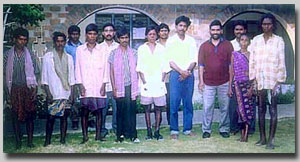
ANTODAYA Chairman with Leprosy Patients and LEPRA Medical Team |
||||||||||||||||||||||||||||||||||||||||||||||||||||||||||||||||||||||||||||||||||||||||||||||||||
Home ~
A Brief Note ~
Programs ~
Target Groups ~
Donations ~
Contact Info